Counting the Cost
The operator motor is the heart of your automatic driveway gates Vancouver system. It handles the heavy physical lifting, managing the precise acceleration and deceleration required to move heavy wood, iron, or aluminum panels. Because it operates behind the scenes, it’s easy to take for granted—until mechanical wear or electrical issues bring movement to a complete halt.
Whether you rely on residential gate automation Vancouver for private home security or heavy-duty commercial gate automation Vancouver to manage industrial facility access, a struggling motor creates immediate risks. Beyond trapping vehicles or freezing logistics lines, a failing motor compromises your property’s perimeter security and can trigger severe electrical shorts across your control board.
When signs of strain appear, calling a dedicated electric gate company Vancouver prevents minor issues from escalating. Discover the primary causes of motor failure, the risks of delaying repairs, and how our specialized gate automation service in Vancouver delivers rapid, precision solutions to keep your property protected.
What are the signs of a damaged automatic gate motor?
Common signs of a damaged automatic gate motor include a gate that moves extremely slowly, unusual grinding or humming noises, intermittent stopping mid-cycle, or a complete failure to respond to remote commands despite having power. In many cases, physical damage is accompanied by burnt electrical odors or leaked hydraulic fluid near the operator housing.
Can a misaligned gate ruin an automatic gate opener motor?
The True Cost of Ignoring a Damaged Gate Motor
When a gate motor begins to fail, it rarely stops working instantly without warning. It usually gives indicators like sluggish cycles or strange noises. Leaving a struggling motor unaddressed leads to three major problems:
1. Lost Perimeter Security
When a motor burns out or jams, it often leaves the gate locked open as a fail-safe. For commercial centers or private estates, an open gate destroys your physical security. This leaves your property exposed to immediate theft and trespassing.
2. Control Board Burnout
A jammed motor experiences immense electrical resistance. As it forces a broken gearbox or seized chain to turn, it draws excessive current. This massive spike can fry your main control board and melt wire harnesses. Excessive resistance directly increases electrical current draw. To learn more about how physical strain impacts electronic drive components, you can read about electrical overloads on Wikipedia.
3. Complete Entrapment and Operational Downtime
If your gate motor fails while closed and your manual bypass is stuck or rusted shut, your vehicles are trapped inside or outside the property. For businesses, this can grind daily operations to a halt, delaying shipments, blocking customers, and costing thousands of dollars in lost productivity within hours.
What Causes Automatic Gate Motors to Fail?
Automated systems operate outdoors 24/7, making them vulnerable to a unique set of environmental and mechanical stressors:
Sustained Structural Resistance: If your gate is misaligned or sagging, the motor is forced to push past its engineered weight limits. This constant strain rapidly overheats the motor windings and strips the internal nylon or brass gears.
Pest and Insect Infestations: Snails, slugs, spiders, and mice love the warmth generated by gate operator enclosures. They frequently nest inside the motor housing, causing devastating short circuits on the electrical terminals.
Water Ingress and Corrosion: Despite weatherproofing, Vancouver’s relentless rain and seasonal dampness can breach aging gaskets. Water inside the motor housing rusts bearings, degrades lubrication, and corrodes internal wiring.
Electrical Surges and Lightning: Sudden voltage spikes from the local power grid can instantly obliterate the delicate capacitors and logic boards inside your gate operator.
How WEAGA Restores a Damaged Gate Motor
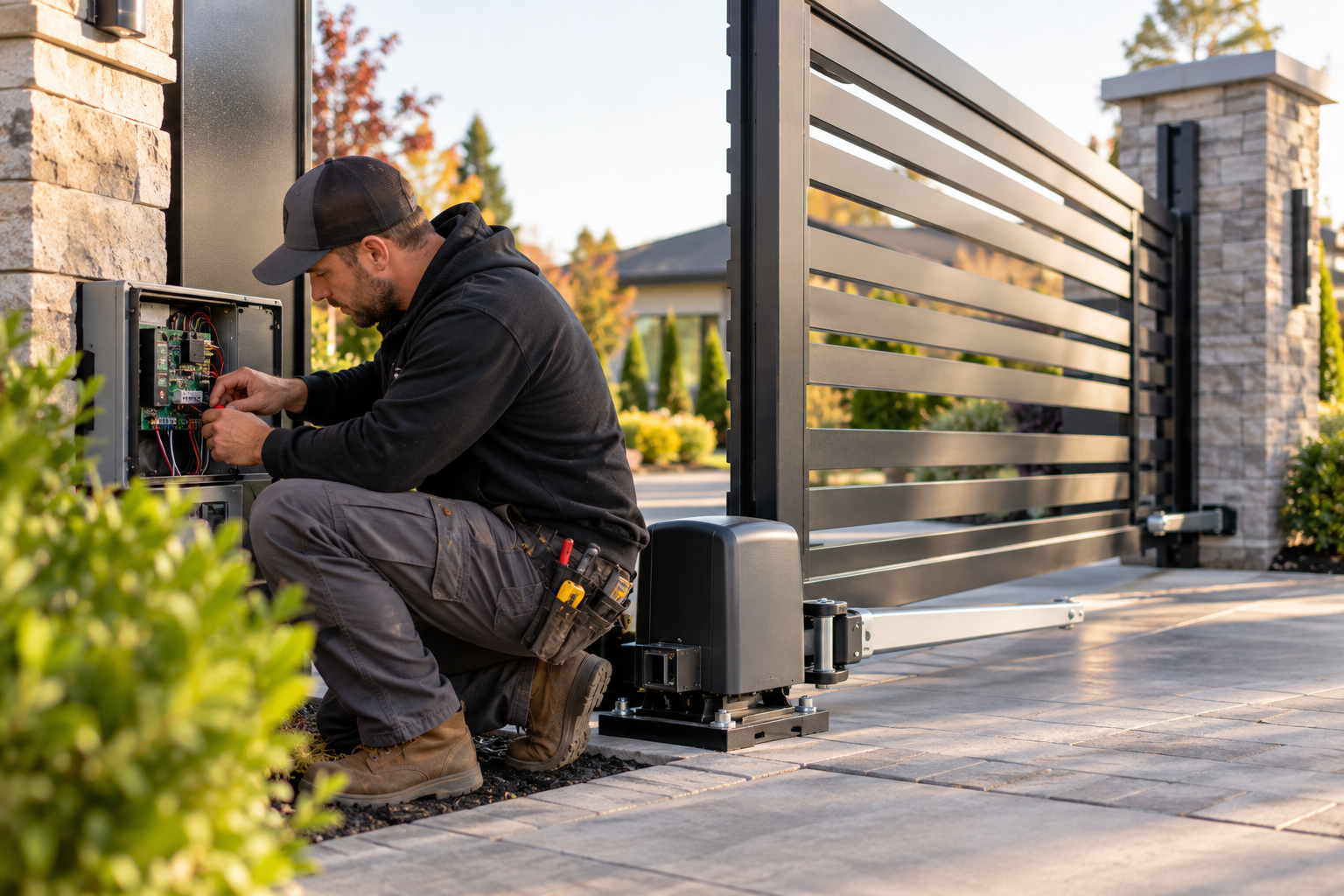
At Wilson Electrical and Gate Automation, we bring specialized diagnostic tools and deep electrical expertise to every service call. We don’t just swap parts; we diagnose the root cause to make sure the failure doesn’t happen again.
Comprehensive Electrical Diagnostics
We test voltage delivery, measure current draw under load, and check the integrity of your system’s capacitors and relays. This ensures we spot whether the issue is a dead motor or an upstream power delivery problem.
Gearbox and Mechanical Rebuilding
If the internal motor components are structurally sound but the gears are stripped, our technicians can rebuild or replace chains, drive sprockets, internal limit switches, and gear sets to restore flawless mechanical transfer.
Total System Integration & Upgrades
If your motor is completely burned out beyond repair, we supply and install top-tier, commercial-grade replacement operators. We match the exact weight and duty-cycle requirements of your property and seamlessly program your existing remotes, keypad entry systems, and safety sensors to the new unit.
Bring Power and Reliability Back to Your Gate
A struggling gate motor is a ticking time bomb for your property’s accessibility and security. Don’t wait until you are trapped in your driveway or left with an unsecured facility overnight.
Contact the local automation experts at Wilson Electrical and Gate Automation (WEAGA) today for rapid, professional gate motor diagnostics and repair services across the Lower Mainland.