An electric gate is the ultimate convenience and security upgrade for your property. It greets you after a long day, keeps uninvited guests out, and adds curb appeal. But when it stops working properly—or decides to open and close on its own—it quickly goes from a luxury to a major headache.
Before you panic or call an expensive technician for a simple fix, let’s explore the most common electric gate problems and practical ways to troubleshoot and resolve them.
1. The Gate Won’t Open or Close at All
When your gate is completely unresponsive, the issue is usually power-related or a complete loss of communication between your controls and the motor.
- Check the Power Supply: It sounds simple, but a tripped circuit breaker or a blown fuse is often the culprit. Check your home’s main electrical panel to see if the gate’s breaker has flipped.
- Inspect the Batteries: If your gate has a battery backup system, the batteries may be dead, corroded, or failing to hold a charge. Test or replace them if necessary.
- Manual Release: If your gate is stuck closed and you need to get out (or stuck open and you need to secure your property), use the manual release key to disengage the motor and operate the gate by hand until a technician can look at it.
2. The Gate Keeps Reversing Mid-Cycle
Modern electric gates are packed with safety features designed to prevent them from crushing cars, pets, or people. However, these mechanisms can sometimes trigger falsely, causing the gate to stop and reverse.
- Clean and Align Photoeyes (Safety Beams): Infrared safety sensors face each other across the gate’s path. If they are misaligned, covered in spiderwebs, blocked by debris, or blinded by direct sunlight, the system thinks something is blocking the way and reverses the gate. Wipe the lenses clean and ensure they face each other directly until indicator lights show a solid connection.
- Clear the Track or Hinges: For sliding gates, check the track for pebbles, leaves, or ice buildup. For swing gates, check the hinge path for obstructions. Any friction or resistance can trip the safety sensor.

3. The Gate Has a Mind of Its Own (Opening/Closing Autonomously)
If your gate is operating without your command, it can feel unsettling and compromise your security.
- Check for Stuck Remote Buttons: A remote control left in a car console or a pocket might have a physically stuck button, continuously sending an “open” signal. Check all transmitters, including spare ones.
- Radio Frequency Interference (RFI): Nearby competing radio signals—from new electronic devices, faulty wireless doorbells, or even neighbors’ garage and gate remotes sharing a similar frequency—can trigger erratic behavior.
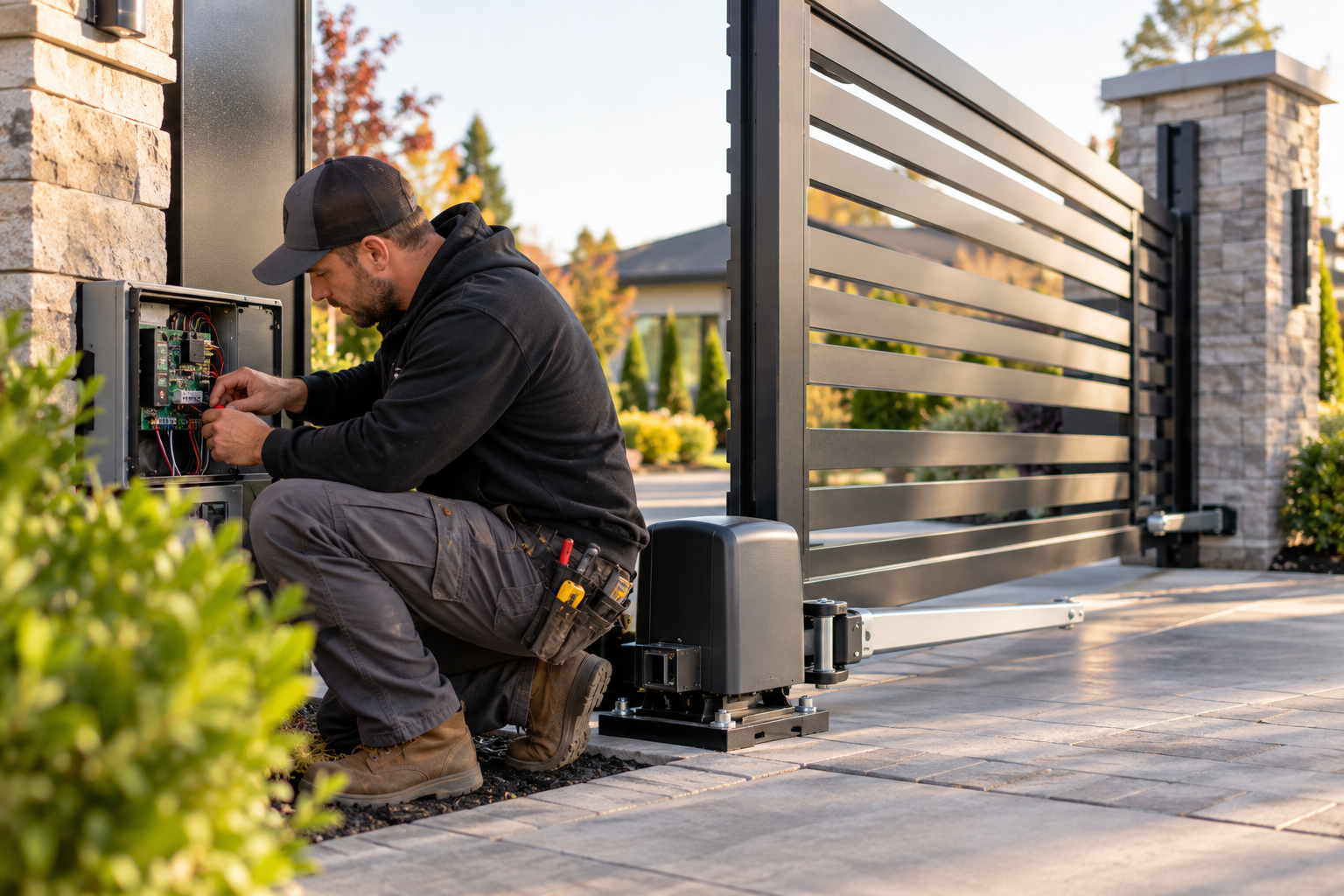
- Water Intrusion: Moisture inside the control box can short-circuit the electronics, sending phantom signals to the circuit board. Carefully open the box, inspect for water damage, and dry it out completely if needed.
4. Slow, Jerky, or Noisy Movement
If your gate is moving sluggishly, grinding, or making loud squealing noises, the issue is typically mechanical.
- Lubricate Moving Parts: Chains, rollers, hinges, and bearings require regular lubrication to function smoothly. Apply a high-quality, weather-resistant lubricant (avoiding heavy grease that attracts dirt and dust on tracks).
- Inspect the Drive Chain: On chain-driven sliding gates, the chain can stretch or sag over time, causing it to slip off the sprockets. Check the tension and adjust it if necessary.
- Worn-Out Rollers and Gears: Over years of use, mechanical components wear down. If gears are stripped or rollers are seized up, they will strain the motor and require replacement.
5. Control Board Glitches
The control board is the brain of your electric gate system. Power surges, lightning storms, or simple electronic wear-and-tear can cause glitches.
- Perform a Hard Reset: Turn off the power supply to the gate completely, wait about 30 seconds, and turn it back on. This simple reboot can clear temporary software glitches on the board.
- Professional Diagnosis: If a hard reset doesn’t work and all fuses/wiring look intact, you may be dealing with a blown circuit board component that requires professional repair or replacement.
When to Call a Professional
While many maintenance tasks—like cleaning sensors, clearing tracks, changing remote batteries, and lubricating hinges—are DIY-friendly, some jobs are best left to the experts:
- Electrical Line Voltage: Never attempt to fix high-voltage wiring inside the main power supply or control unit yourself.
- Complex Control Board Issues: Diagnosing microchip failures or reprogramming advanced automation boards requires specialized tools.
- Heavy Motor/Gear Replacement: Replacing heavy motors, massive sliding gate tracks, or complex swing arms requires professional labor and equipment.
Final Thoughts
An electric gate is a finely tuned system of mechanical parts, electrical wiring, and sensitive electronics. By performing routine maintenance—such as keeping sensors clean, tracks clear, and moving parts lubricated—you can prevent most common failures. If you run into a persistent or dangerous electrical issue, don’t hesitate to contact a qualified gate technician to keep your property safe and secure.