Picture this: You’re enjoying a quiet evening at home when, BEEP! The electric gate swings open. Confused, you close it with your remote. Ten minutes later, BEEP! It opens again. This can be maddening, unsettling, and a major security concern. Before you call an exorcist (or an expensive technician!), let’s explore the most common culprits behind this paranormal-seeming gate behavior and how you can fix it.
We’ll break down the issues from simple fixes to more complex ones, helping you diagnose and solve the problem.
1. The Usual Suspects: Remote & Transmitter Issues
Nine times out of ten, the problem lies with the device you use to control the gate.
A. Stuck Buttons on Your Remote
This is the #1 cause. A button on one of your remotes (or a neighbor’s, if they’re on the same frequency) might be physically stuck in the down position, continuously sending an “open” signal.
- Solution: Check all your remotes. Shake them gently to see if a button rattles back into place. Replace the battery if it’s low, as this can sometimes cause erratic behavior. If you find a stuck button, try to free it or replace the remote entirely. Don’t forget to check the remotes in cars parked outside!
B. Radio Frequency Interference (RFI)
Your electric gate opener uses radio waves to communicate. If there’s a stronger or competing signal nearby, it can trigger the gate.
- Sources: Think about new electronic devices you or your neighbors have installed recently. Ham radios, certain baby monitors, older wireless doorbells, or even malfunctioning electronic equipment can cause interference.
- Solution: Try to identify the source of the interference. If possible, turn off suspicious devices one by one to see if the gate stops acting up. If the interference seems to come from outside, you may need to contact a professional to adjust your system’s frequency or install an external antenna.
C. Accidental Activation in Your Pocket
How many times have you accidentally activated your car alarm or opened your garage door with the remote in your pocket? The same can happen with your gate.
- Solution: Be mindful of where you place your remotes. Consider using remote holders or remotes with sliding covers to prevent accidental presses.
2. System Sensitivities: Safety Devices & Wiring
Modern electric gates are packed with safety features that can sometimes be too sensitive.
A. Misaligned or Blocked Photoeyes (Safety Beams)
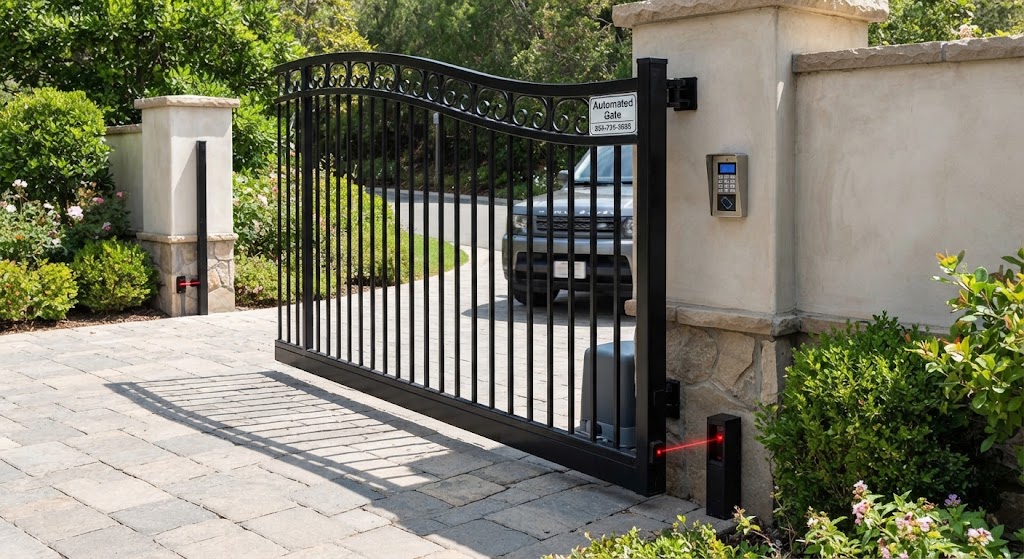
These are the infrared sensors that detect objects (like your car or a person) in the gate’s path. If they are misaligned, dirty, or blocked by sunlight, leaves, or cobwebs, they may falsely signal the gate to open or reverse.
- Solution: Clean the lenses of both photoeyes with a soft, dry cloth. Ensure they are pointing directly at each other. You might need to adjust their position slightly until the indicator light shows a solid connection.
B. Damaged or Corroded Wiring
Electrical wiring is susceptible to the elements. Water ingress, loose connections, or chewed wires can create intermittent electrical shorts that send phantom signals to your gate’s control board.
- Solution: Inspect the wiring from the control board to the gate operator, motors, and photoeyes. Look for signs of damage, corrosion (greenish or white powder), or loose terminals. This is often a job for a professional, as dealing with line voltage can be dangerous.
C. Water Intrusion in the Control Box
The control box is the brain of your electric gate. If its seal is compromised and water gets in, it can wreak havoc on the electronics, causing erratic operation, including opening and closing on its own.
- Solution: Open the control box cover (carefully!) and inspect the inside for moisture or signs of water damage. If you see water, immediately turn off power to the gate. Dry it out completely. You may need to replace the control board or the entire control unit.
3. Mechanical Gremlins: The Gate Itself
Sometimes the problem isn’t electronic, but mechanical.
A. Obstruction in the Gate Path
While you might not see a big box in the way, small pebbles, twigs, or even a buildup of ice and snow can provide enough resistance to trigger the gate’s safety mechanism, causing it to reverse and open when it should be closing.
- Solution: Thoroughly inspect the entire path of the gate. Clear away any debris, leaves, or snow. Check the track (for sliding gates) or hinges (for swing gates) for any obstructions or stiffness.
B. Worn-Out Components
As gate components age (gears, rollers, hinges), they can create more friction or become unstable. This can strain the motor and trigger safety features, leading to unpredictable movement.
- Solution: If your gate system is older, it might be time for a professional inspection to identify worn-out parts that need replacement.
4. The Big Brain: Control Board Malfunction
If you’ve ruled out all the above, the issue may be within the gate’s control board itself.
A. Software Glitch or Component Failure
Like any computer, a control board can experience a temporary glitch that a simple reset can fix. More seriously, an electronic component on the board could be failing.
- Solution: First, try a hard reset: Turn off the power to the gate completely, wait for 30 seconds, and then turn it back on. If the problem persists, the control board may need to be repaired or replaced. This is almost always a task for a qualified gate technician.
When to Call in the Professionals (and What to Expect)
While many of these issues can be DIY-fixed, others require expertise and specialized tools.
- Do-It-Yourself (DIY): Changing remote batteries, cleaning photoeyes, checking for and clearing minor obstructions, basic visual inspection of wiring (without touching live components).
- Call a Pro: Diagnosing and repairing control board issues, complex wiring problems, replacing motors or gears, aligning photoeyes that are difficult to adjust, or any situation where you feel uncomfortable or unsafe.
What a Pro Will Do:
- Thorough Diagnosis: They’ll have the diagnostic tools to pinpoint the exact cause, whether it’s an electrical short, a faulty component, or interference.
- Expert Repair: They can safely and effectively repair or replace damaged parts.
- Peace of Mind: They’ll ensure your gate operates safely and reliably, protecting your property and loved ones.
Conclusion
Dealing with a gate that has a mind of its own is frustrating, but it’s rarely a mystery. By systematically working through the possibilities—from the simple (remote batteries) to the complex (control board failure)—you can often identify and resolve the issue. Don’t let a ghost in the gate haunt your home security. Take control and get your electric gate working perfectly again. If you’re ever in doubt, don’t hesitate to call a qualified professional. Safe and secure is the only way to go!