Automated driveway gates offer incredible convenience, security, and curb appeal for both residential and commercial properties. However, like any hardwired mechanical system exposed to the elements, they can occasionally malfunction. When your gate refuses to open or close, it can disrupt your daily routine and compromise your property’s security.
Whether you operate a sliding or swing gate system, understanding frequent technical hiccups can save you time and money. Here are three common issues with automated gates and how you can address them.
1. Sensor Misalignment or Obstruction
The Problem
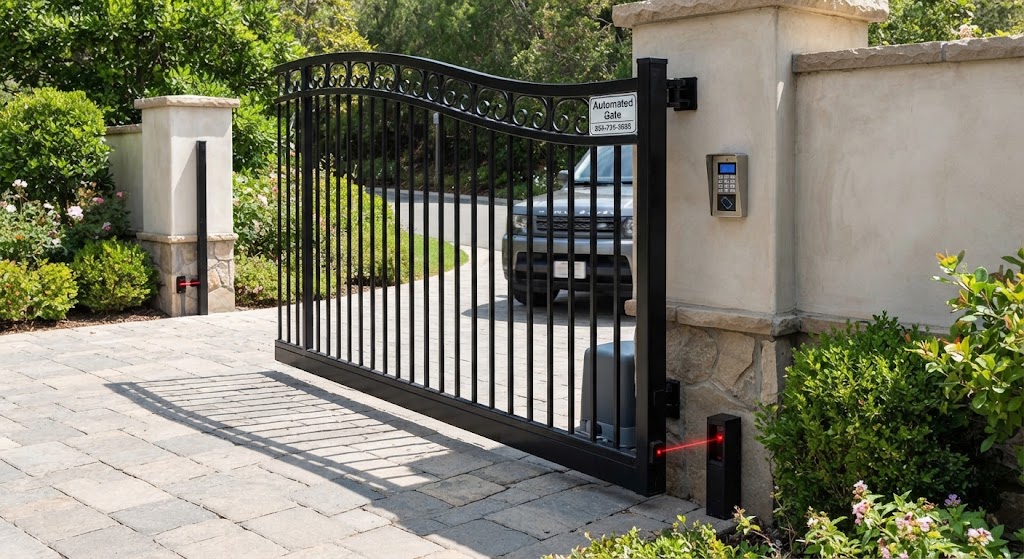
Safety photo-eyes (sensors) are critical components located near the base of the gate pillars. Their job is to detect vehicles, pedestrians, or pets, stopping or reversing the gate if something crosses its path. Because these sensors sit low to the ground, they are prone to getting blocked by dirt, spiderwebs, heavy foliage, or snow. Direct, blinding sunlight or a physical bump can also knock them out of alignment. If the infrared beam between the two eyes is broken or misaligned, the control board will assume an obstruction is present and refuse to let the gate close.
How to Fix It
- Clean the Lenses: Wipe both sensor covers gently with a soft, clean microfiber cloth to remove dust, mud, or cobwebs.
- Check Alignment: Look at the indicator lights on the sensors. If a light is flickering or turned off, the units are likely misaligned. Loosen the mounting screws slightly, adjust them until the solid connection light reappears, and retighten them.
- Clear Debris: Ensure that tall grass, leaves, or stray objects are not sitting directly in front of the sensor path.
2. Power Supply Failures and Dead Remotes
The Problem
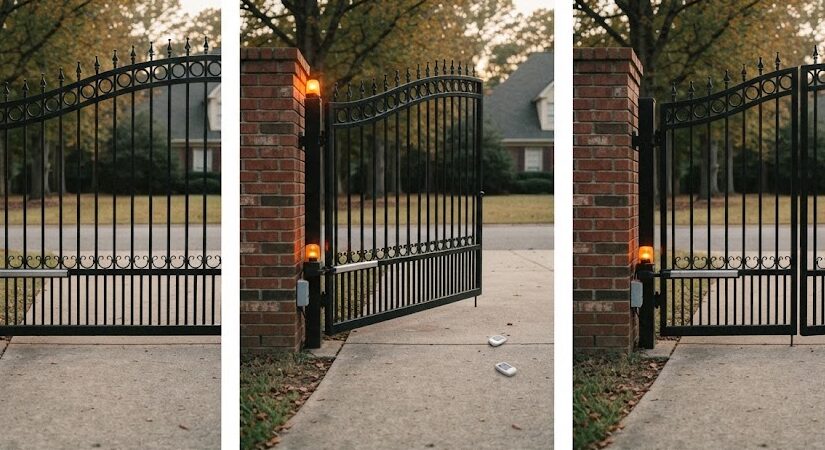
When an electric gate completely stops responding, the root cause is often electrical. This can range from a tripped circuit breaker or a blown fuse to a completely drained backup battery. If only the remote controls fail to trigger the gate while the keypad or intercom still works, the issue is isolated to dead remote batteries or a lost radio frequency sync.
How to Fix It
- Check Your Home Circuit Breaker: Inspect your main electrical panel to ensure the breaker dedicated to the gate has not tripped. Reset it if necessary.
- Test Alternative Entry Points: Try using the hardwired keypad, intercom, or smartphone app. If the gate opens via these methods, your remote control likely just needs a battery replacement.
- Inspect the Backup Battery: Many systems feature battery backups for power outages. If the battery is old or corroded, it will fail to hold a charge and can cause erratic control board behavior. Clean terminals or replace the battery unit as needed.
3. Track Obstructions and Mechanical Wear
The Problem
Sliding gates rely heavily on a smooth metal track and rolling wheels, while swing gates depend on motorized hinge arms. Over time, sliding gate tracks accumulate gravel, leaves, ice, and dirt, causing the gate to jam, drag, or strain the motor. Similarly, lack of lubrication on swing gate hinges can cause excessive friction, forcing the motor to work harder and eventually trigger thermal overload protection.
How to Fix It
- Clear the Track: Walk the entire length of a sliding gate track. Use a broom, pressure washer, or wet-dry vacuum to clear out accumulated debris, pebbles, and leaves.
- Inspect Rollers and Chains: Check the rollers and drive chain for signs of wear or tightness. Ensure the chain isn’t sagging excessively.
- Lubricate Moving Parts: Apply a recommended silicone- or Teflon-based lubricant to the hinges, roller bearings, and sliding tracks. Avoid heavy greases that tend to attract and trap dirt and dust.
When to Call a Professional
While basic troubleshooting can resolve minor alignment and power glitches, automated gates involve complex electrical circuits, heavy mechanical loads, and high-tension components. If you have tried these fixes and your gate is still malfunctioning—or if you suspect internal motor failure or electrical shorting—it is time to contact experienced local technicians for professional automatic gate repair. Professional diagnostics ensure your gate is restored safely without risking further damage to your property’s access control system.
Frequently Asked Questions
1. Why is my automated gate reversing or stopping halfway?
This is typically caused by an obstruction or sensor misalignment. Safety photo-eyes (sensors) near the base of the gate pillars can be blocked by dirt, spiderwebs, leaves, or snow. If the infrared beam between the sensors is interrupted or knocked out of alignment, the control board will detect a blockage and force the gate to stop or reverse for safety.
2. How can I open my electric gate during a power outage?
Most automated gate systems feature a manual release mechanism, allowing you to disengage the motor and open the gate by hand. Look for a manual release latch or key slot on the motor housing. Additionally, many systems are equipped with a battery backup that will automatically kick in during a power loss if it is charged and functioning properly.
3. How often should I lubricate my automatic gate?
You should inspect and lubricate your gate’s moving parts—such as hinges, roller bearings, and sliding tracks—at least every 6 months, or more frequently if you live in an area with extreme weather, heavy dust, or snow. Always use a silicone- or Teflon-based lubricant rather than heavy greases, which tend to attract dirt and cause jams over time.