Gate Automation vs. Wildlife & Livestock: Smart Deterrence & Animal-Safe Sensors
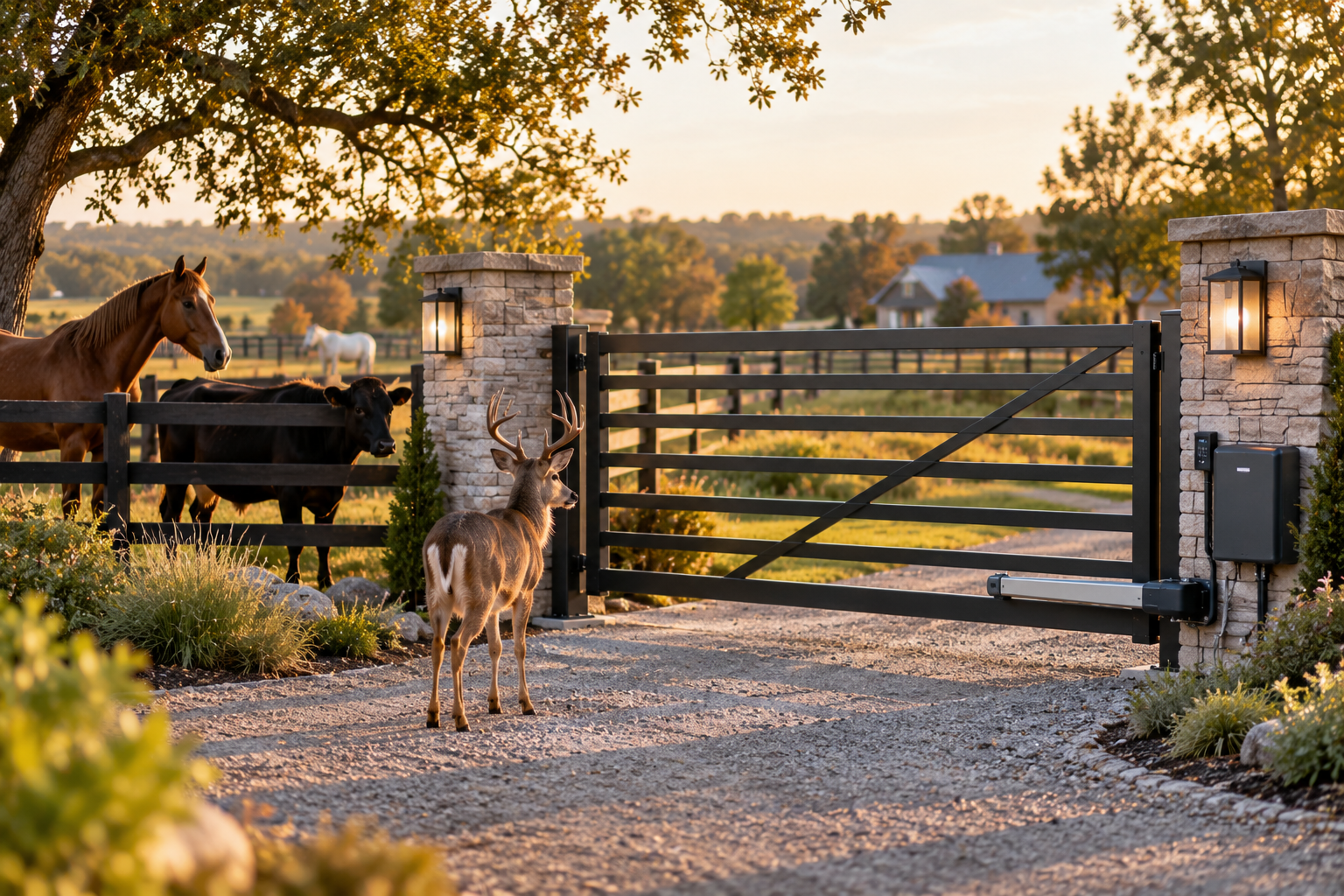
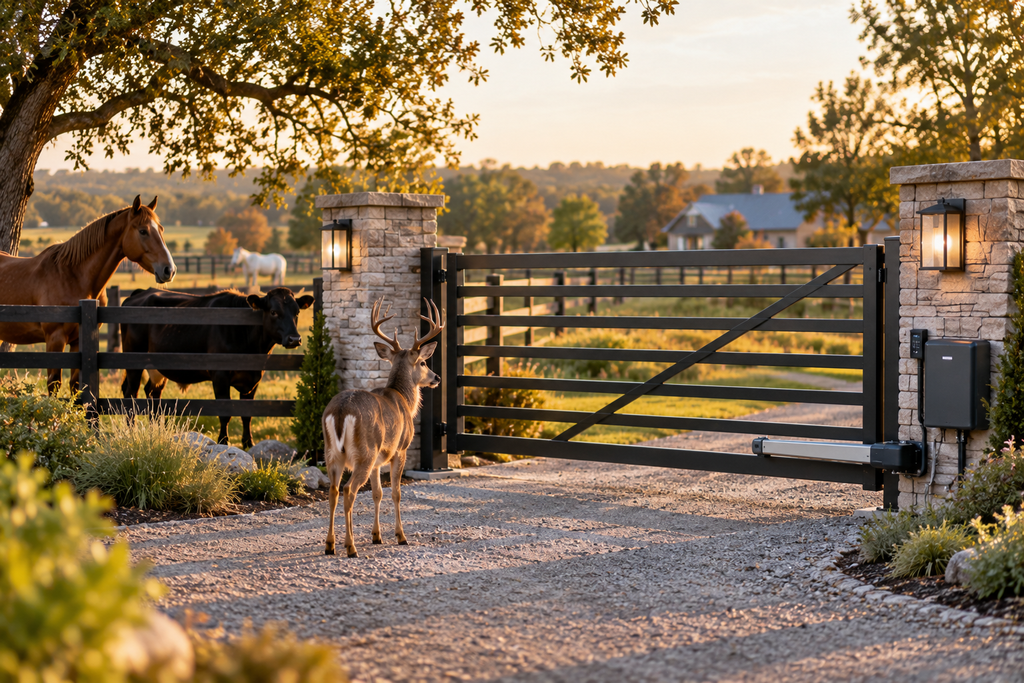
Automating a driveway or perimeter gate on a farm, ranch, rural estate, or suburban property bordering wildlife habitats presents unique engineering challenges. Unlike standard residential gates designed purely for vehicles and foot traffic, rural automated gates must account for unpredictable animal behavior—from heavy livestock leaning against panels to deer triggering optical sensors and small pests nesting inside electrical enclosures.
This guide explores specialized gate automation strategies, animal-safe sensor technologies, and physical reinforcement techniques to keep property secure while preventing accidental injury to livestock and local wildlife.
The Hidden Challenges of Animal Management in Gate Automation
Standard off-the-shelf gate operators are programmed to detect rigid, vehicular obstructions. When animals interact with an automated gate, several issues often arise:
- False Sensor Triggers: Deer, coyotes, and large dogs frequently break the infrared beam of standard photo-electric sensors, causing gates to open unexpectedly or fail to close.
- Structural Strain & Hinge Sag: Cattle, horses, and livestock frequently rub against or lean on gate panels, putting immense lateral force on operator arms, hinges, and mounting posts.
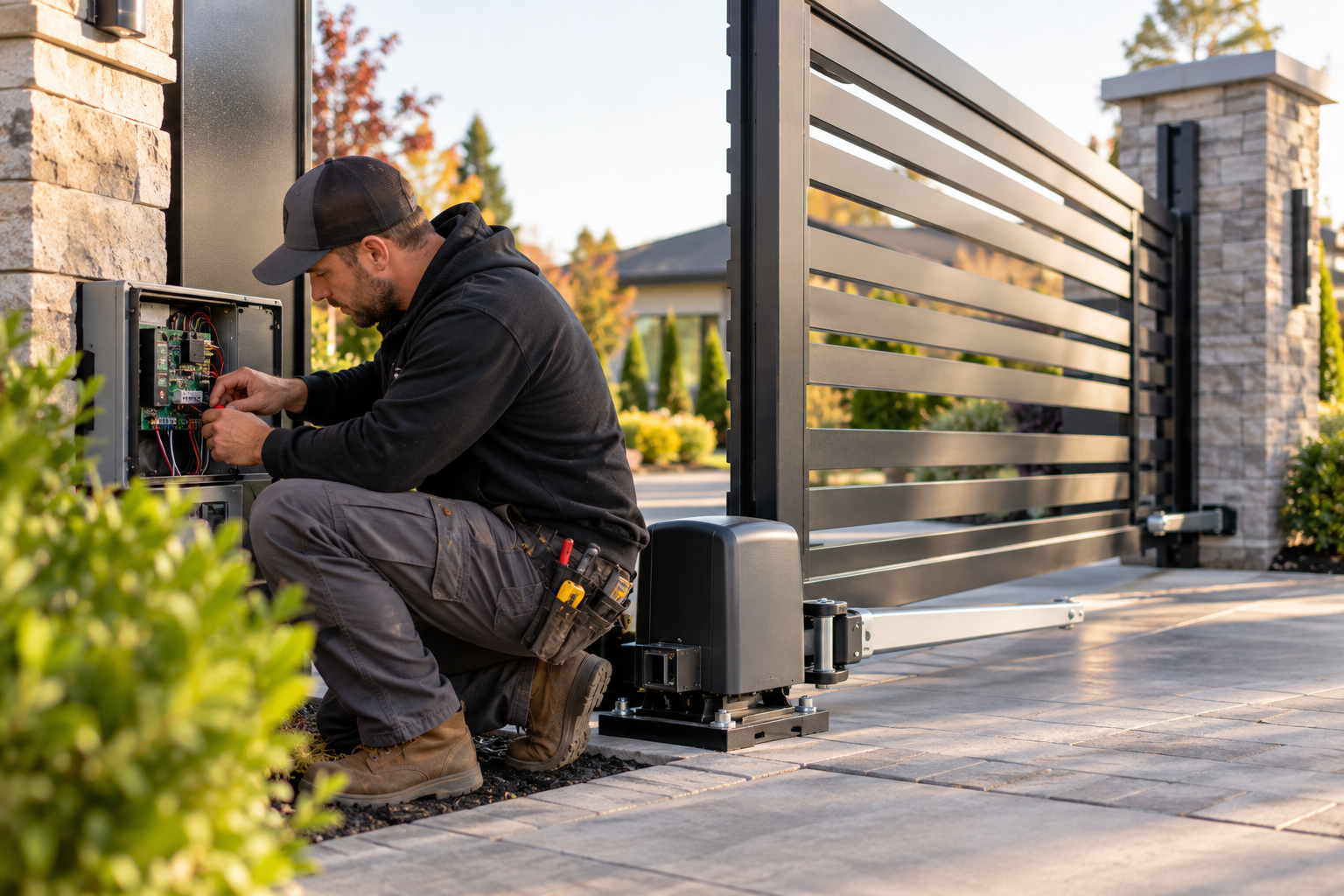
- Electrical Box Infestations: Warm control boxes, battery enclosures, and operator housings attract mice, snakes, wasps, and ants, leading to shorted circuit boards and wire damage.
- Trapping & Entrapment Risks: Slow-moving or herd animals can get caught between closing gate leaves or between a sliding gate and its guide posts if safety margins are not properly calibrated.
Essential Hardware & Sensor Technologies for Animal-Safe Automation
To balance livestock containment and wildlife deterrence with seamless vehicular access, modern gate automation systems rely on specialized sensing and structural control hardware.
1. Dual-Beam and Height-Adjustable Photo-Eyes
Standard single-beam photo-eyes positioned at bumper height often miss small animals or get repeatedly tripped by deer tails and jumping wildlife.
- Dual-Beam Sensors: Require both top and bottom beams to be broken simultaneously before triggering an obstruction signal, filtering out smaller wild animals while detecting vehicles reliably.
- Elevated Mounting Heights: Positioning primary safety beams above typical livestock snout height prevents animals from accidentally keeping gates stuck open by standing near the posts.
2. Micro-Processor Torque Sensing & Smart Force Margins
Modern gate operators feature built-in obstruction detection (inherent entrapment protection) that measures motor amp draw.
- If a horse, cow, or pet comes into contact with a moving gate panel, the operator detects the sudden increase in resistance and instantly stops and reverses direction.
- Setting exact force sensitivities prevents the gate from exerting dangerous pressure on an animal while maintaining enough torque to move heavy gates against wind resistance.
3. Underground In-Ground Induction Loops vs. Above-Ground Motion
Motion-activated radar or infrared sensors can be triggered by any moving animal within range.
- Induction Loops: Cutting magnetic loop detectors into the driveway surface (or burying pre-formed loops under gravel) ensures the gate only activates when a large metal mass (a truck, trailer, or tractor) passes overhead, completely ignoring animal movement.
4. Sealed & Gasketed Pest-Proof Enclosures
Electrical damage caused by pests is one of the leading causes of rural gate opener failure.
- Install control boards inside NEMA-rated, weather-sealed enclosures fitted with rubber gaskets.
- Seal all conduit entry points with expanding foam or silicone sealant to prevent rodents, spiders, and fire ants from entering high-voltage compartments.
How to Prevent Livestock from Damaging Gate Operators
| Challenge | Cause | Automation & Structural Solution |
| Leaning & Rubbing | Livestock using gate panels for scratching | Install high-torque hydraulic operators with positive mechanical locks, or add off-set electric fence hot wires along panel faces. |
| Gate Pushing / Latch Forcing | Animals crowding gate opening | Utilize heavy-duty magnetic locks (1,200+ lbs holding force) or solenoid pin locks to prevent panels from being pushed open. |
| Chewed Cabling & Wires | Rodents and horses chewing exposed wire | Encase all low-voltage and high-voltage wiring inside rigid metal conduit (EMT or PVC-coated rigid steel). |
| Sensor Tampering | Cattle licking or nudging optical sensors | Mount photo-eyes inside protective steel hood cages recessed into gate posts. |
Frequently Asked Questions (FAQ)
Will an automatic gate hurt livestock if it closes on them?
Properly installed automatic gate operators compliant with UL 325 safety standards feature inherent contact sensors. If a gate leaf touches an animal, the operator instantly stops and reverses to prevent injury. However, force limits must be professionally calibrated to match the gate’s weight.
How do I stop deer from opening my automatic driveway gate?
Replace motion-sensing overhead detectors with buried magnetic loop detectors. Magnetic loops only detect metal vehicles, so passing deer, dogs, or wildlife will never trigger the gate to open.
How do I keep ants and mice out of my gate opener control box?
Ensure all wire conduit entry holes at the bottom of the enclosure are sealed with silicone or duct seal putty. Placing mothballs or specialized pest repellent strips inside the outer housing (away from direct wiring) also helps deter nesting insects and rodents.
Specialized Rural Gate Automation Solutions
Designing an automated gate system that stands up to livestock, resists wildlife interference, and operates reliably in rural environments requires specialized planning. Consulting with experienced gate automation technicians ensures your system combines physical durability with advanced, animal-safe sensor technology.