Choosing the material for your automatic driveway gate is a bit like picking a partner for a long-term relationship: you want something that looks stunning from the curb, handles the local climate without falling apart, and doesn’t demand high-maintenance drama every single weekend.
In the Pacific Northwest, your gate faces a relentless onslaught of moisture, temperature swings, and urban grime. Let’s weigh the top three contenders—wood, wrought iron, and aluminum—so you can pick a perimeter champion that balances curb appeal with structural survival.
1. Wood: The Timeless Charmer (With a High-Maintenance Streak)
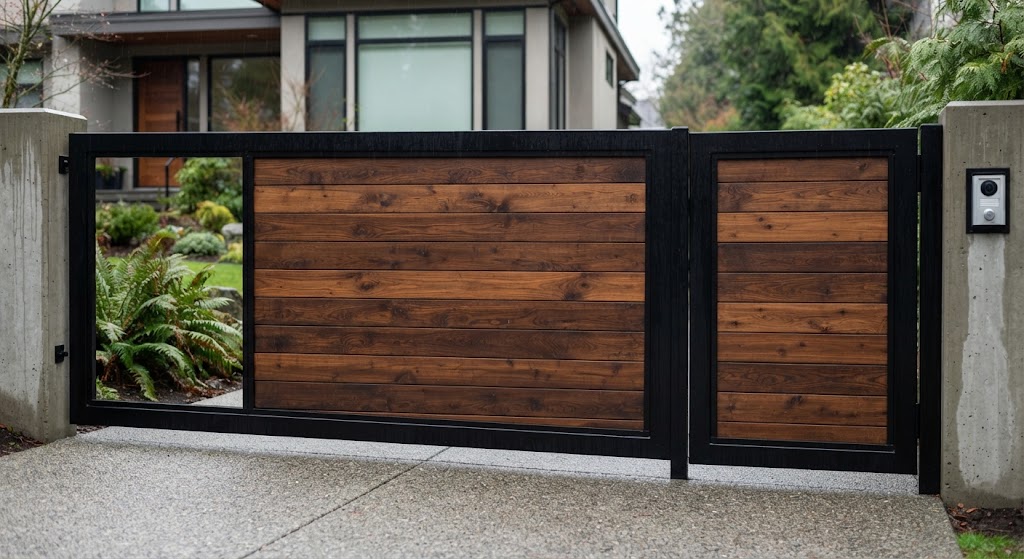
- The Vibe: Warm, organic, and exceptionally private. Wood gives you that classic estate look, blocking out the outside world completely.
- The Reality: Wood is gorgeous until it meets Vancouver’s legendary rainfall. Untreated timber will warp, swell, rot, or grow moss faster than you can say “organic patina.”
- The Verdict: Choose wood if you are deeply committed to an annual ritual of power-washing, staining, and sealing. If you prefer a “set-it-and-forget-it” security barrier, keep scrolling.
2. Wrought Iron: The Heavyweight Classic (Heavy Metal Drama)
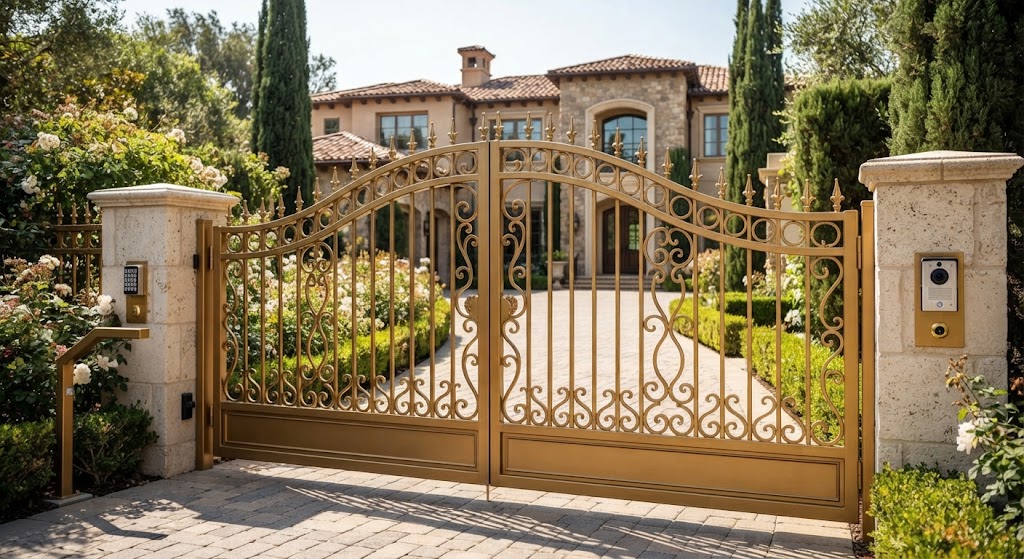
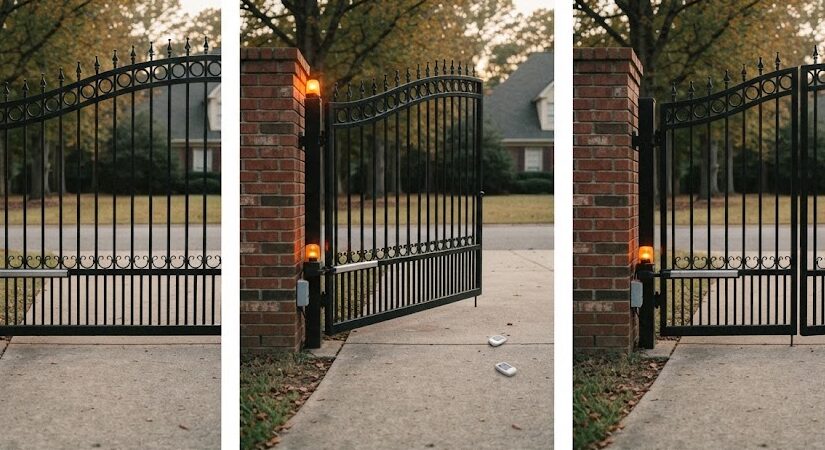
- The Vibe: Imposing, ornate, and virtually indestructible. If you want your property to channel a stately European fortress or a high-end heritage home, iron is your ticket.
- The Reality: Real wrought iron is heavy—like, requires-industrial-grade-operators-and-a-reinforced-foundation heavy. And while it is tough, iron’s worst enemy is moisture. Left unprotected by a compromised powder-coat, it will rust straight through its aesthetic in no time.
- The Verdict: Go with iron if you want maximum architectural gravitas and don’t mind occasional touch-ups with anti-rust paint when the Pacific drizzle starts chipping away at the finish.
3. Aluminum: The Modern Pragmatist (The Wet Coast Favorite)
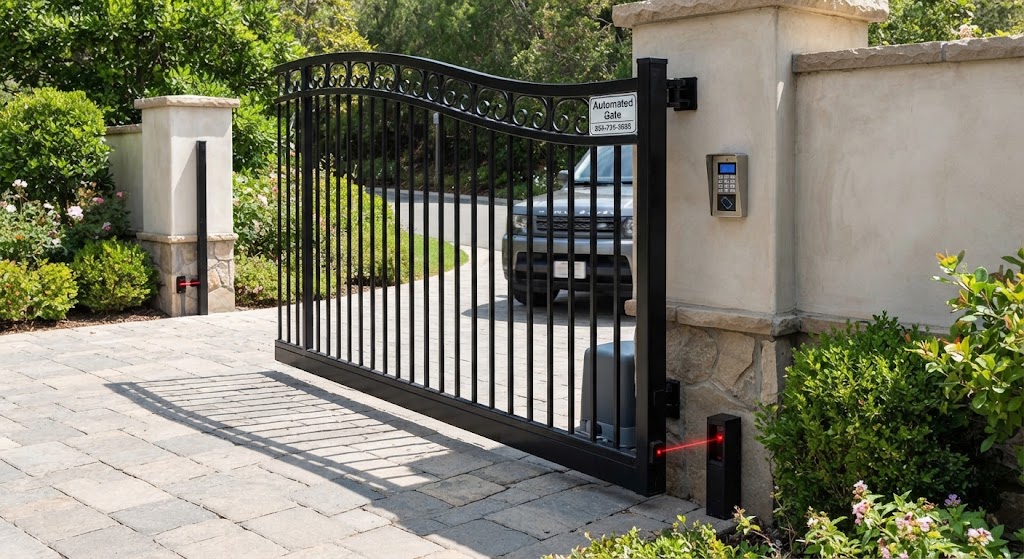
- The Vibe: Sleek, versatile, and engineered for modern living. Aluminum can mimic the heavy look of iron or the clean horizontal lines of contemporary slatted wood without the corresponding baggage.
- The Reality: Aluminum refuses to rust. It is lightweight, which means less strain on your gate motor, fewer mechanical failures, and easier manual overrides during a power outage.
- The Verdict: For most properties dealing with wet winters and coastal air, aluminum is the undisputed MVP. It offers high-end looks with zero corrosion anxiety.
Quick Answers for Property Owners
Q: Which gate material lasts the longest in a rainy climate? A: Aluminum and properly galvanized, powder-coated steel/iron offer the longest lifespans in wet climates because they do not absorb moisture or rot like timber.
Q: Is aluminum strong enough to secure a commercial driveway? A: Yes. Extruded architectural-grade aluminum is exceptionally rigid, highly impact-resistant, and widely used for commercial and high-traffic residential slide and swing gates.
Q: Can I get the look of wood without the maintenance? A: Absolutely. Many modern aluminum gates feature a powder-coated wood-grain finish that gives you the warmth of cedar or mahogany with zero warping or staining required.
Wrapping Up
Whether you choose the stately weight of iron, the natural warmth of wood, or the bulletproof practicality of aluminum, your gate material dictates how much your weekends will cost you in maintenance.
Ready to find the ideal material for your next installation? Contact our team at WEAGA to explore custom gate designs tailored to your property.