When an automatic driveway gate system is working properly, it offers seamless security and convenience at the push of a button. But what happens when a severe storm knocks out your power, your gate motor malfunctions, or a dead backup battery leaves you stranded in your car?
Fortunately, the short answer is yes—almost all electric gates come equipped with a manual override system.
Understanding how your gate’s manual override works ensures you won’t be trapped on the wrong side of your driveway during an emergency. Here is a complete guide to how manual overrides function, how to use them, and essential safety tips to keep in mind.
Why Every Electric Gate Needs a Manual Override
Automated gates rely on continuous electrical current and intricate mechanical gears to function. Without a manual bypass, a simple power outage could turn your luxury gate into a massive, immovable physical barrier.
A manual override mechanism decouples the gate leaf or sliding panel from the motorized drive system. Once engaged, the motor’s internal locking gears are disengaged, allowing you to push or pull the gate open and closed by hand with minimal effort.
How Manual Overrides Work by Gate Type
Different gate configurations use different mechanical methods to transition from automated to manual operation:
1. Sliding Gates
- The Mechanism: Sliding automatic gates are driven by a continuous metal chain or gear rack connected to a floor-mounted motor.
- How Override Works: The motor housing typically features a small access door or lock. Inserting a specific physical key and turning it rotates an internal release lever or gear cam. This physically lifts or disconnects the drive gear from the gate’s rack, allowing the entire panel to slide smoothly along its tracks.
2. Swing Gates (Actuator-Driven)
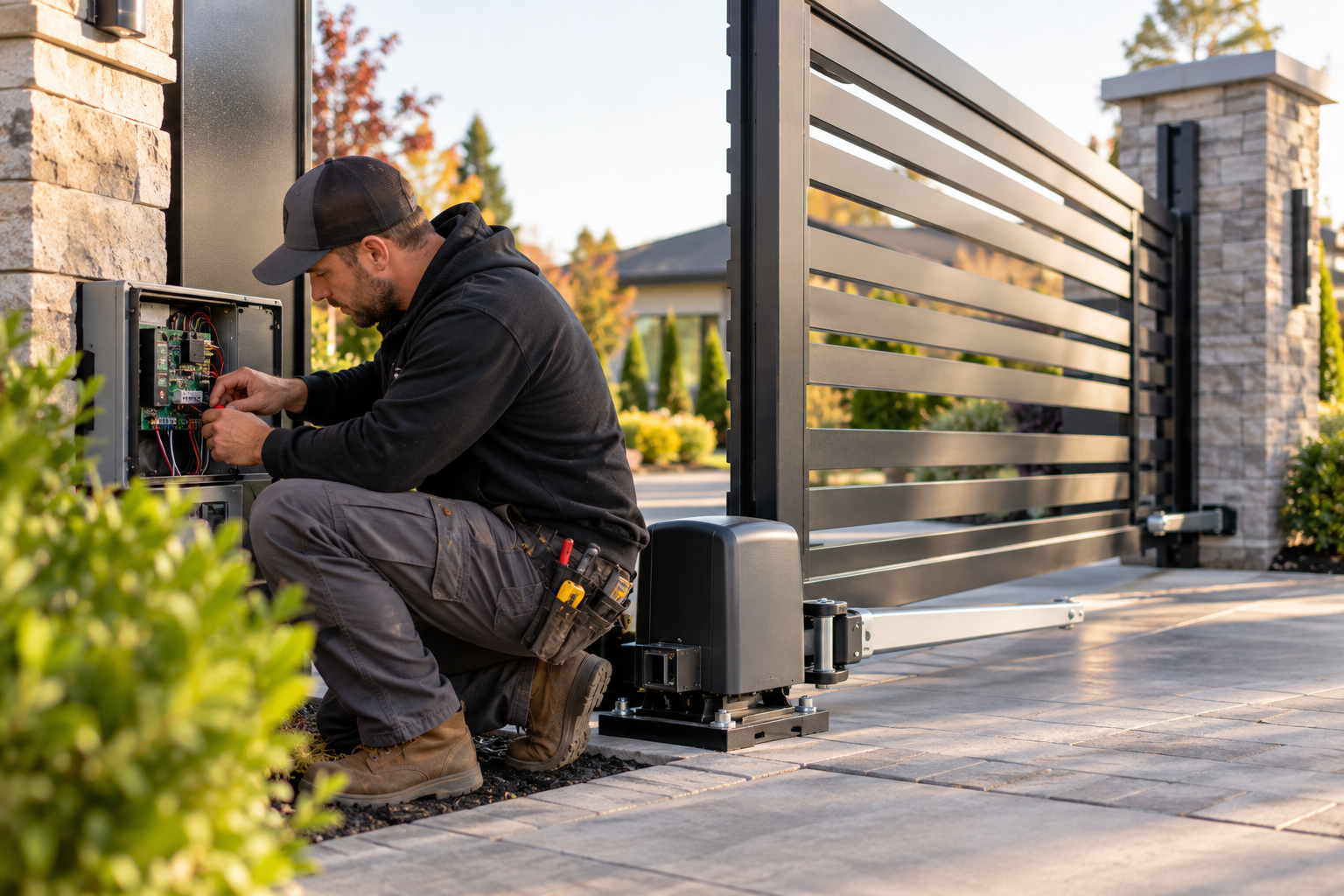
- The Mechanism: Swing gates use linear actuator arms or hydraulic pistons attached to the gate pillars to push and pull the panels.
- How Override Works: Most swing gate motors feature a quick-release pin, a specialized release latch, or a keyed cylinder located underneath or on top of the motor arm. Removing the pin or turning the key frees the piston shaft from its mounting bracket, letting the gate swing freely on its heavy-duty hinges.
3. Underground Operators
- The Mechanism: Premium residential properties often use subterranean motors housed in waterproof boxes directly beneath the gate pivot points.
- How Override Works: These systems usually require a specialized long release lever or manual key inserted into a top-access slot near the hinge point to manually unlock the underground gear assembly.

Step-by-Step: How to Safely Engage Your Manual Override
If you ever find yourself locked out or unable to power your gate, follow these steps to switch to manual mode safely:
- Cut the Power: Before touching any release mechanisms, turn off the power supply to the gate at the breaker box or unplug the control panel. This prevents the motor from suddenly re-engaging while your hands are near moving gears.
- Locate the Release Point: Find the keyed release box or latch specified in your gate’s owner manual. Keep your manual keys stored safely in an accessible place (like inside your house or vehicle, rather than locked inside a garage behind the gate).
- Insert and Turn the Key: Unlock the housing cover and rotate the release lever or turn the internal key 90 to 180 degrees until you feel the tension release.
- Test the Movement: Gently push the gate open by hand. It should glide or swing smoothly. If you encounter heavy resistance, do not force it, as the motor may not have fully disengaged.
- Secure the Gate After Use: Once power is restored or you are ready to reactivate the system, close the gate fully, reverse the manual lever or key, and relock the housing. Always test the automatic remote control to ensure the gears have re-engaged properly before leaving the gate unattended.
Important Safety Considerations
While manual overrides are lifesavers during emergencies, they require careful handling:
- Watch for Pinch Points: Large automated gates weigh hundreds of pounds. When operating them manually, keep hands clear of tracks, hinges, and pinch points.
- Maintain Security: Remember that a gate in manual override mode is no longer locked by the motor. If you leave your gate disengaged while waiting for power to return, secure the gate with a heavy-duty external padlock or chain if necessary.
- Regular Testing: Test your manual override mechanism at least once or twice a year. Outdoor mechanisms can accumulate dust, cobwebs, and rust over time, making them difficult to operate during an actual emergency.
Final Thoughts
An automatic gate should enhance your peace of mind, not create anxiety about being trapped. By familiarizing yourself with your system’s manual override location and procedure, you ensure that you remain in total control of your property—no matter what the weather or your electrical grid is doing.
If your manual release is jammed, broken, or difficult to turn, contact a professional automatic gate technician to service the internal locking components.
Frequently Asked Questions
1. Do electric gates have a manual override during a power outage?
Yes. Almost all electric gates are equipped with a manual override system that decouples the gate leaf or sliding panel from the motorized drive system. This allows you to push or pull the gate open and closed by hand when power fails.
2. How do you unlock a sliding automatic gate manually?
Sliding gates typically feature a motor housing with a small access door or lock. Inserting and turning a specialized physical key rotates an internal release lever or gear cam, which disconnects the drive gear from the metal rack and lets the panel slide freely.
3. Is it safe to operate an automatic gate manually?
Yes, but you should always turn off the power supply at the breaker box before touching any release mechanisms to prevent the motor from suddenly engaging. Additionally, keep your hands clear of pinch points, and ensure you secure the gate afterward since the motor is no longer locking it.